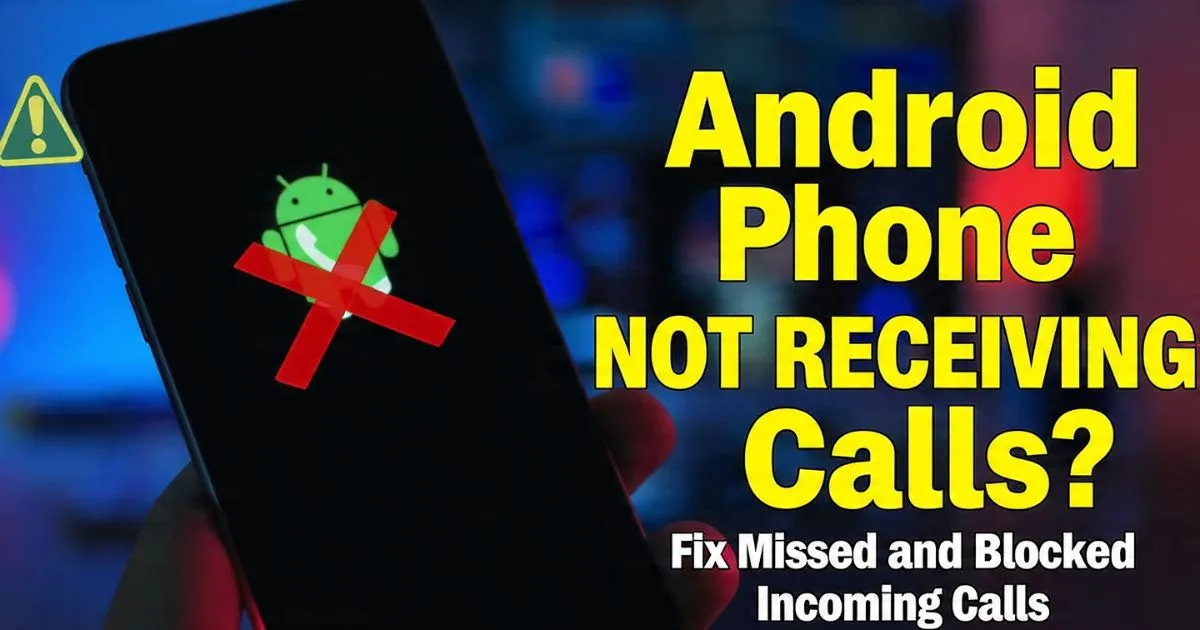
If you’re dealing with Android incoming call issues, don’t panic. We’re going to walk through the trenches together. Whether you’re on a Samsung Galaxy, a Pixel, or a Xiaomi, I’ll show you how to hunt down the culprit and get your dialer working again.
Imagine this: you’re waiting for a crucial job interview callback or a confirmation from your doctor. You glance at your phone—full bars, 5G lit up like a Christmas tree—only to see a “Missed Call” notification pop up without the phone ever ringing. Or worse, your spouse asks why you’re “blocking” them because their calls go straight to voicemail.
It’s maddening. I’ve spent over a decade behind a repair bench, and let me tell you, an Android phone not receiving calls is one of the top three complaints I handle. It’s rarely just one thing. It could be a rogue software update, a crusty SIM card, or a hidden setting you toggled while half-asleep.
Also Reade : Complete Android Fix Guide: Every Android Problem Solved (2026)
Software Hurdles: DND and Blocking Settings
Before we start ripping out SIM cards, let’s look at the “ghost in the machine.” Android’s software is incredibly smart—sometimes too smart for its own good.
The Do Not Disturb (DND) Trap
The most common reason for Android phone not ringing for calls is actually Do Not Disturb Mode. You might think it’s off, but many users have schedules set up that kick in automatically.
- Check the “Exceptions”: Go to Settings > Sound & vibration > Do Not Disturb. Check “People.” If “Calls” is set to “None” or “Favorite contacts only,” anyone else trying to reach you will be greeted by a dial tone that cuts straight to voicemail.
- The “Repeated Callers” Toggle: I always tell my clients to keep “Allow repeated callers” ON. If someone calls twice within 15 minutes, Android assumes it’s an emergency and lets it through.
The Google Phone App and Spam Filters
If you use the Google Phone App, its Spam Filter might be doing its job a little too well. I’ve seen cases where legitimate local businesses are flagged as “Suspected Spam,” causing the Android incoming call screen not appearing because the system silently kills the call.
- Open the Phone app.
- Tap the three dots (Settings).
- Navigate to Spam and Call Screen.
- Switch off “Filter spam calls” temporarily to see if your missing calls start appearing.
Third-Party Interference (Truecaller & Co.)
Are you using Truecaller? While it’s great for identifying telemarketers, it often conflicts with the native Android System Intelligence. If Truecaller is set as your “Default Caller ID & Spam app,” it can cause Android incoming calls ending automatically before you even see the “Accept” button. Try setting the system Phone app back to default to test.

System Fixes: Resetting Connections and Apps
Sometimes the OS just gets “tired.” A process hangs, a cache file gets corrupted after an Android 15 update, and suddenly your Android phone cannot receive calls.
The “Soft Reset” (The Tech’s First Rule)
No, I don’t mean just turning it off and on. For most modern Androids, hold the Power Button + Volume Down for 10 full seconds. This forces the hardware to power cycle and re-initialize the cellular modem. It fixes about 30% of the Android incoming calls random failures I see in the shop.
Resetting Network Settings: The Magic Bullet
If your Android no incoming calls but outgoing works, your network configuration is likely borked. This is the “Nuclear Option” before a factory reset.
- Path: Settings > System > Reset options > Reset Wi-Fi, mobile & Bluetooth.
- What it does: It flushes your APN Settings, clears saved Wi-Fi passwords, and resets your LTE/5G Connectivity handshake with the tower.
- Warning: You’ll have to re-enter your Wi-Fi passwords, but it’s a small price to pay for a working phone.
The Safe Mode Test
“Is it an app I installed?” To find out, hold the “Power Off” icon on your screen until the Safe Mode prompt appears. If your phone receives calls perfectly in Safe Mode, then a third-party app (like a launcher, a battery saver, or a custom theme) is causing an app conflict.
Hardware and Network: SIM Cards and Signal Issues
I’ve had people come in convinced their motherboard was dead, only to find out their SIM Card had a fingerprint smudge on it.
Physical SIM vs. eSIM
If you use a physical SIM, eject it. Look at the gold contacts. Are they scratched? Do they look dull? Use a standard pencil eraser (the soft pink kind) and very gently rub the gold pins to remove oxidation. Re-insert it and see if that fixes the Android SIM card issue incoming calls.
If you’re on an eSIM, you might need your carrier to “push” a new profile. This is common if you’ve recently done a SIM swap or ported your number.
“Ghost” Signal Bars
You might see 4 bars of signal, but if you’re on a congested 5G tower, the “handshake” for a voice call might fail.
- Try this: Go to Settings > Network & internet > SIMs > Preferred network type.
- Switch it from 5G to LTE (4G).
- I’ve seen many Android phone not receiving calls after update issues solved by this because the 5G modem firmware was buggy.

From the Tech Bench: A Real-World Case
Last month, a customer brought in a Samsung Galaxy S22 that refused to receive calls only when he was at home. He could call out fine. We checked everything—DND was off, no blocked numbers.
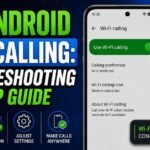
It turned out his WiFi Calling was the culprit. His home router had a “SIP ALG” setting enabled that was dropping the incoming voice packets. We disabled WiFi Calling on his phone, and boom—calls started flooding in. If you have Android incoming calls not working on WiFi calling, try switching to “Cellular Preferred” or turning it off entirely.
Common Pitfalls and How to Avoid Them
1. Carrier Services App
Most people don’t know this exists, but Carrier Services is a background app on the Google Play Store that handles the “bridge” between your OS and your provider. If this app is outdated, you might get Android incoming calls delayed issue. Go to the Play Store, search for “Carrier Services,” and hit update.
2. The Call Forwarding “Sticky” Setting
I once spent two hours troubleshooting a OnePlus phone that wouldn’t receive calls. It turned out the user had enabled Call Forwarding months ago and forgot.
- Open Phone app > Settings > Calling Accounts > Call Forwarding.
- Ensure “Always forward” is OFF. Sometimes, carriers have a network-side glitch where this stays active even if the phone says it’s off. Dial
*#61#to check the status.
3. Bluetooth Hijacking
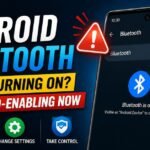
If you have wireless earbuds or a smart watch connected, your phone might be “receiving” the call but routing the audio and the “Accept” screen to the peripheral. I’ve seen people miss calls because their phone was ringing inside their gym bag where their earbuds were still connected.
Advanced Solutions: Carrier Support and Factory Resets
If you’ve tried the network resets, cleaned the SIM, and checked the Spam Filter, we’re entering the “Advanced” zone.
When to Call Your Carrier
Sometimes it’s not you; it’s them. Specifically, ask them for a “Line Refresh” or a “Reprovision.” This forces the carrier’s switches to treat your phone as a brand-new device on the network. This is especially vital if you’re experiencing Android incoming calls issue during roaming or after a security patch.
Factory Data Reset (The Last Resort)
If you’re still facing the Android phone cannot answer incoming calls or the incoming call screen not appearing after everything else, it’s time to wipe the slate clean.
- Back up your data (Google Drive + Google Photos).
- Go to Settings > System > Reset options > Erase all data (factory reset).
- Crucial: Do NOT restore your apps immediately. Set the phone up as “New” and test the calling. If it works, then one of your apps was definitely the problem.
Hardware Failure
If even a factory reset doesn’t fix it, we might be looking at a motherboard problem or a failing internal antenna. If your phone has water damage or you’ve recently dropped the phone, the physical connection to the cellular radio might be severed. At that point, it’s time to visit a pro (like me) for a hardware diagnostic.
Final Thoughts: Stay Connected
An Android phone not receiving calls is a bridge-burning issue. In my experience, 90% of these cases are solved by Resetting Network Settings or disabling a hidden Do Not Disturb schedule.
Don’t let your phone decide when you’re “available.” Take control of those settings, keep your Carrier Services updated, and if all else fails, don’t be afraid to demand a new SIM card from your provider.
Still stuck? Drop a comment with your specific model (e.g., Samsung Galaxy S24 or Pixel 8) and which Android version you’re running. I’ve seen a lot of weird bugs lately with Android 14 and Android 15, and I’m happy to help you troubleshoot the specifics!