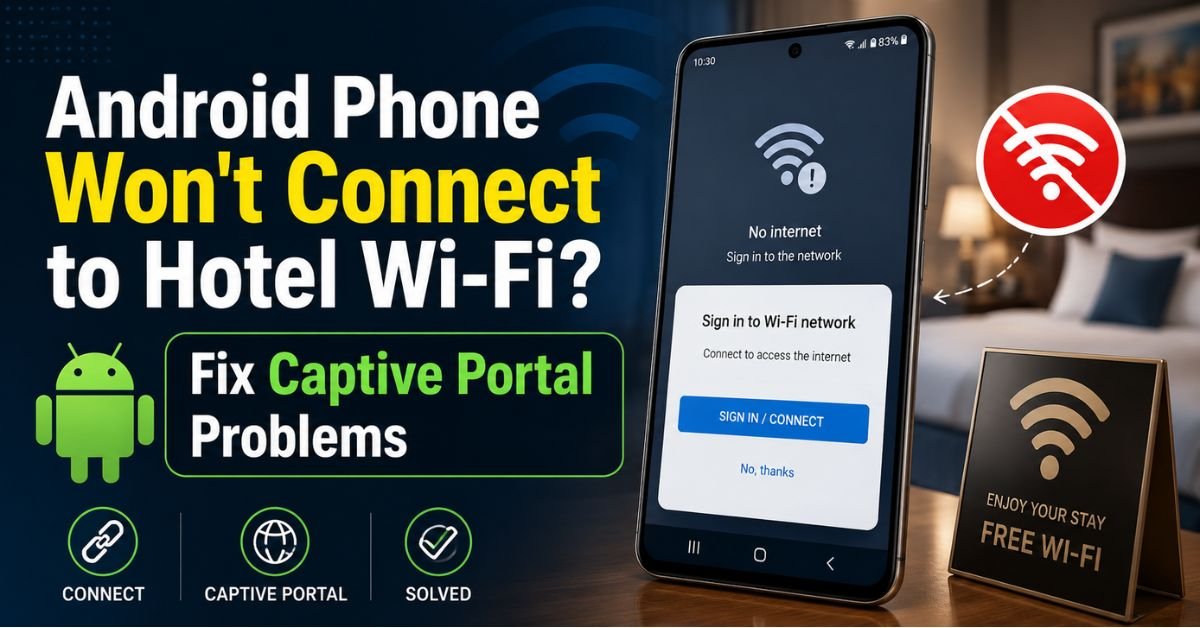
Fix Android Hotel Wi-Fi & Captive Portal Login Issues.I’ve been there. You’ve just checked into your room after a six-hour flight, your legs are cramping, and all you want to do is cast some Netflix or check your morning itinerary. You tap the hotel’s SSID, wait for that familiar “Sign in to network” notification to pop up, and… nothing. Or worse, it says “Connected,” but the little Wi-Fi icon has a tiny, mocking “X” or exclamation point next to it.
The “Connected, No Internet” status is the ultimate tech tease. Most people think the Wi-Fi is just “broken,” but as someone who’s spent way too many nights troubleshooting network handshakes in hotel lobbies, I can tell you: the problem is usually a breakdown in the Captive Portal redirect. Your Android phone is trying to be too secure for its own good, or the hotel’s aging router is tripping over modern privacy features.

Let’s skip the generic “restart your phone” advice. You’ve probably tried that. Here is the deep-dive, hands-on guide to forcing your Android device to play nice with hotel Wi-Fi.
The Frustration of Hotel Wi-Fi Connectivity
Why does this happen? Unlike your home network, which uses a simple WPA2/WPA3 password, hotels use “open” networks that intercept your initial web request and redirect it to an Authentication Page. This is the Captive Portal.
The struggle is real because Android has become incredibly aggressive about security. If your phone suspects the network is trying to “hijack” your connection (which is exactly what a captive portal does), it might block the redirect entirely. You’re stuck in a limbo where the phone has a local Gateway IP Address, but the DHCP Lease isn’t fully authorized because you haven’t clicked that “I Agree” button yet.
Common symptoms include:
- The login page simply refuses to load.
- The “Sign in to network” notification disappears instantly.
- You get a “Your connection is not private” SSL error.
- The Wi-Fi stays connected but nothing loads.
Hands-On Fixes: Forcing the Login Page
When the automatic redirect fails, you have to take the wheel. The system is waiting for an unencrypted trigger to send you to the portal.
The “NeverSSL” Trick
Most websites today use HTTPS (encrypted). If you try to go to google.com, the hotel’s gateway can’t easily intercept the request to show you the login page because that would look like a man-in-the-middle attack. The fix? Go to neverssl.com. This site is a godsend for tech travelers. It’s a plain, unencrypted HTTP site. Because there is no SSL Certificate to worry about, the hotel’s router can easily “break” the connection and shove the login page in front of your face.

Manual Gateway Entry
If NeverSSL doesn’t work, try talking directly to the router.
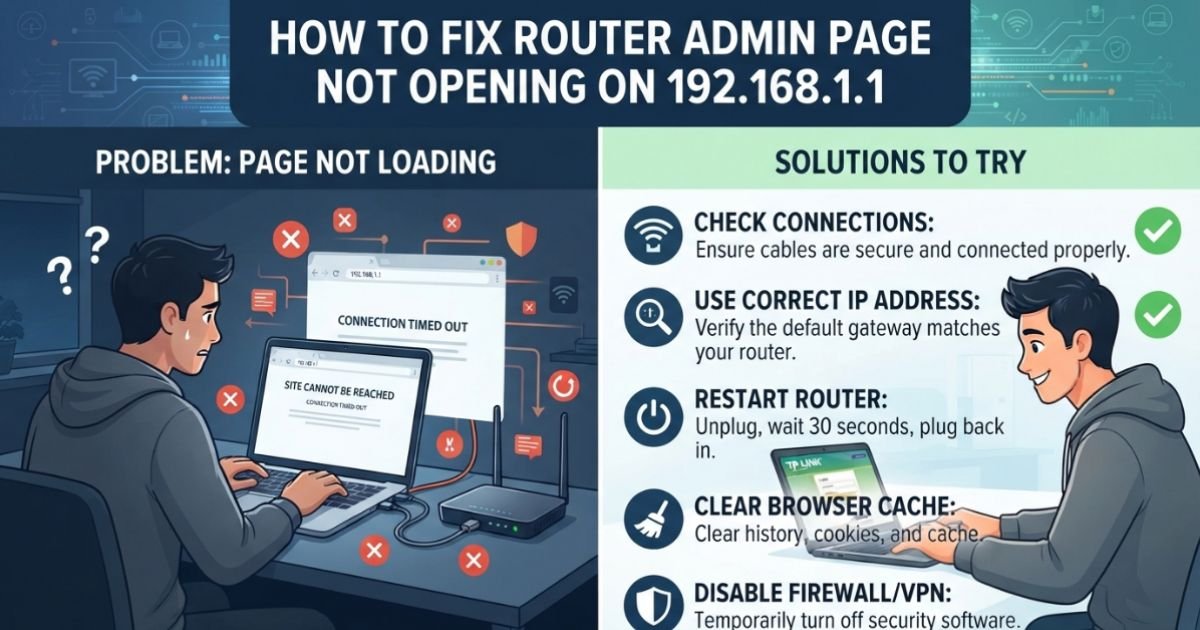
- Go to your Wi-Fi settings and tap the gear icon next to the hotel network.
- Look for “Gateway” or “Router” under the IP settings. It’s usually something like
192.168.1.1or10.0.0.1. - Copy that IP address and paste it directly into Chrome’s address bar.
- Hit enter. Often, this forces the router to serve up its authentication splash page.
The DNS Reset (8.8.8.8)
Sometimes, your phone is trying to use a specific DNS server that the hotel is blocking until you’ve logged in. I’ve found that manually typing 8.8.8.8 (Google’s DNS) or 1.1.1.1 (Cloudflare) into the browser can sometimes nudge the gateway into realizing you’re trying to reach the outside world, triggering the redirect.
Pro Tip: Clear the Browser Cache If you’ve stayed at this hotel chain before (like a Hilton or Marriott), your browser might be trying to load a cached, expired version of the login page. Open Chrome, go to Settings > Privacy and Security > Clear Browsing Data, and clear just the “Cached images and files” for the last hour.
The MAC Address Randomization Conflict
This is the “silent killer” of hotel Wi-Fi connections on modern Android devices (Android 10 and up).
To protect your privacy, Android uses MAC Randomization. Instead of giving the hotel your phone’s real, permanent hardware ID (MAC address), it generates a fake, “randomized” one.
The problem? Hotel billing and timing systems rely on your MAC address to know who has paid for Wi-Fi and how long they’ve been connected. If your phone changes its MAC address in the middle of a session, or if the hotel’s gateway doesn’t recognize the “fake” MAC format, the connection will drop or the Authentication Page will never appear.
How to Switch to Device MAC
On a Google Pixel:
- Open Settings > Network & internet > Internet.
- Tap the gear icon next to the hotel Wi-Fi.
- Tap Privacy.
- Switch from “Use randomized MAC” to “Use device MAC”.
On a Samsung Galaxy:
- Go to Settings > Connections > Wi-Fi.
- Tap the gear icon next to the network.
- Tap View more.
- Tap MAC address type and select “Phone MAC”.
The network will disconnect and reconnect. Often, the login page will pop up immediately after making this change. Just remember to switch it back to “Randomized” once you check out for better privacy on other public networks.
Resolving DNS and VPN Obstacles
We all love our privacy, but DNS over HTTPS (DoH) and VPNs are the natural enemies of the captive portal.
The “Private DNS” Trap
If you have “Private DNS” enabled in your Android settings (common if you use AdGuard or Google’s private DNS), your phone is trying to send all DNS queries through an encrypted tunnel. The hotel Wi-Fi needs to “hijack” your DNS to point you to their login page. If it can’t, it just blocks you.
- Go to Settings > Network & internet.
- Look for Private DNS.
- Change it from “Automatic” or a “Private DNS provider hostname” to Off.
- Try connecting again. You can turn it back on once you’ve successfully passed the login screen.
VPN Kill Switches
If you use a VPN like NordVPN or Mullvad, you might have a “Kill Switch” enabled. This prevents any data from leaving your phone unless the VPN is active. But the VPN can’t activate until you log into the hotel Wi-Fi! It’s a classic Catch-22. Disable your VPN entirely while trying to get through the captive portal.
Advanced System-Level Troubleshooting
If you’re still staring at a “No Internet” screen, it’s time to look at the system components responsible for rendering these login pages.
Android System WebView
The “Sign in to network” window isn’t actually a full version of Chrome; it’s a “thin” browser instance powered by Android System WebView. If this app is buggy or outdated, the login page might load as a white screen or crash.
- Go to the Google Play Store, search for “Android System WebView,” and see if there’s an update available.
- If it’s updated and still failing, you can sometimes “Force Stop” the app in your system settings to reset its state.
Clearing Stale DHCP Leases
Sometimes the network assigns you an IP address that was just used by someone else who checked out, and the router gets confused.
- “Forget” the network in your Wi-Fi settings.
- Turn off Wi-Fi for 30 seconds.
- Turn Wi-Fi back on and reconnect. This forces a fresh DHCP Lease request, which can clear up “IP address exhaustion” issues in crowded hotels.
The Nuclear Option: Network Reset
I only recommend this if you’re truly desperate, as it will wipe out all your saved Wi-Fi passwords and Bluetooth pairings.
- Go to Settings > System > Reset options > Reset Wi-Fi, mobile & Bluetooth. This resets the entire networking stack of the OS. It’s remarkably effective at fixing deep-seated handshake issues.
Common Pitfalls and Security Warnings
You might see a scary-looking “Your connection is not private” or NET::ERR_CERT_AUTHORITY_INVALID error.
In a normal situation, you should never click past this. But in a hotel, this happens because the gateway is trying to redirect an HTTPS site to its own (often self-signed) login page. If you are sure you are connecting to the legitimate hotel SSID:
- Tap Advanced.
- Tap “Proceed to [site name] (unsafe)”. This should finally land you on the page where you enter your room number and last name.
A Note on Phishing: Always double-check the SSID name with the front desk. Scammers often set up “Evil Twin” hotspots with names like “Hotel_Guest_Free” to steal credentials. If the portal asks for your credit card info when the Wi-Fi is supposed to be free, disconnect immediately.
Real-Time FAQs
1. Why does my laptop connect to the hotel Wi-Fi but my Android phone won’t?
Laptops (especially Windows) are often less aggressive about MAC randomization by default and handle DNS redirects differently. Android’s “Captive Portal Detection” service is very sensitive; if it doesn’t get a “204 No Content” response from Google’s servers immediately, it assumes the network is bad and stops trying.
2. Can I use a travel router to bypass these problems?
Yes! In fact, that’s my preferred method. A travel router (like those from GL.iNet) connects to the hotel Wi-Fi, you log in once through the router’s interface, and then all your devices connect to the router. This avoids the “too many devices” limit many hotels have and bypasses Android-specific handshake issues.
3. I’m logged in, but the Wi-Fi is incredibly slow. Can I fix that?
Likely not on your end. Most hotels throttle per-device speeds to 5-10 Mbps. However, if you’ve disabled MAC Randomization, the hotel might be “remembering” your device from a previous stay and limiting you. Switching back to a Randomized MAC might actually give you a fresh, unthrottled session.
4. Does the “Sign in to network” notification keep disappearing?
This usually happens when the Android System WebView fails to load the portal fast enough. Use the “NeverSSL” trick in a real Chrome tab instead of relying on the system notification. Chrome is much more robust at handling these redirects than the system-level pop-up.
5. Why does the hotel Wi-Fi keep disconnecting every few hours?
Hotels often set short “Lease Times” for their IP addresses to keep the network from getting clogged. If your phone is using a Randomized MAC, the router might think you are a brand-new device every time you reconnect and demand a fresh login. Switching to “Device MAC” usually stabilizes this.