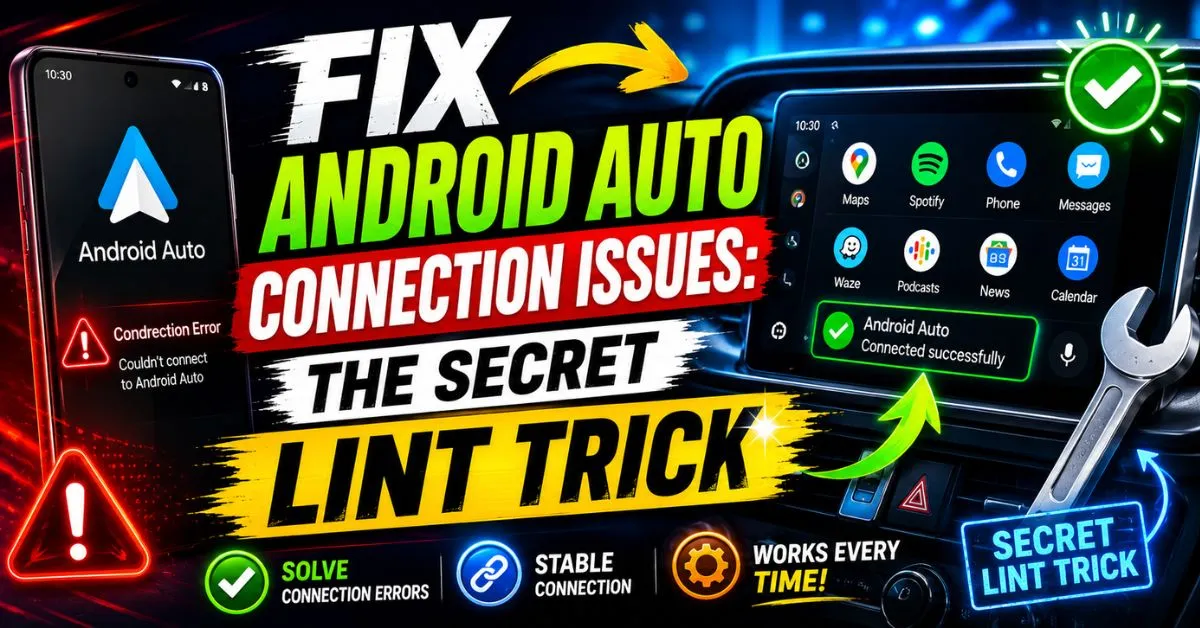
If your Android Auto keeps crashing every time you hit a pothole, the problem isn’t your car’s software—it’s likely a tiny, compressed brick of denim lint wedged deep inside your phone’s charging port. You can fix this “phantom disconnect” instantly by gently excavating the debris with a wooden toothpick to ensure your cable finally clicks into place.
Stop buying $30 “high-speed” cables and stop calling the dealership. This is a physical hardware jam, not a digital glitch.
The Infuriating ‘Disconnect’ Loop
We’ve all been there. You’re navigating a complex highway interchange when suddenly, the screen goes black. Android Auto has disconnected again.
Most drivers blame a “loose” cable or a buggy Samsung or Pixel update. But notice how your cable doesn’t quite “click” into your phone anymore? That subtle wobble is the sound of your connection dying.
The Invisible Culprit: Compressed Pocket Lint
Every time you slide your phone into your jeans, the USB-C port acts like a vacuum. Microscopic fibers from your pockets settle inside.
When you plug in your charger, you aren’t just connecting; you’re hammering that lint into a dense, felt-like plug at the bottom of the port. Eventually, this layer becomes thick enough to prevent the USB-C pins from making full contact for data transfer.
Also Reade : Complete Android Fix Guide: Every Android Problem Solved (2026)
Step-by-Step: The Safe Cleaning Method
Before you grab a paperclip—stop. Using metal objects inside your charging port can short out the pins or cause permanent hardware damage.
- Use a Wooden Toothpick: Or a plastic flosser pick. These are non-conductive and won’t scratch the delicate internal housing.
- The Gentle Dig: Carefully insert the tip into the port and sweep along the bottom. You’ll be shocked at the gray, compacted “carpet” that comes out.
- The Compressed Air Finish: Give it a quick blast of air to clear out any remaining loose fibers.
Personal Take: My $0 ‘Repair’ Story
I was genuinely convinced my Google Pixel 7 had a failing hardware port. I was about to drop $150 on a repair or trade it in early because Android Auto was unusable.
One “Aha!” moment and a single wooden toothpick later, I pulled out a wad of blue denim lint the size of a grain of rice. My cable immediately snapped back in with a satisfying click, and I haven’t had a single disconnect in months.
Preventing Future Android Auto Failures
To keep your connection rock-solid, try to clear your port every three months. If you work in a dusty environment, consider a cheap silicone port plug to seal the opening when you aren’t charging.
If you clean the port and the cable still feels loose, then it’s time to buy a new high-quality, data-rated cable. But 90% of the time? It’s just your pockets sabotaging your drive.
Android Auto Troubleshooting FAQ
Can I use a needle to clean my charging port?
No. Metal objects can short out the pins or scratch the delicate connectors. Always use a non-conductive material like wood or plastic to avoid killing your phone.
Will cleaning the port fix ‘Android Auto Not Found’ errors?
If the cable feels slightly wobbly or doesn’t ‘click’ into place, a physical cleaning is the most likely fix for recognition errors and intermittent drops.
Does this apply to Wireless Android Auto?
No. This fix is specifically for wired connections where physical data transfer is required through the USB-C or Micro-USB port.