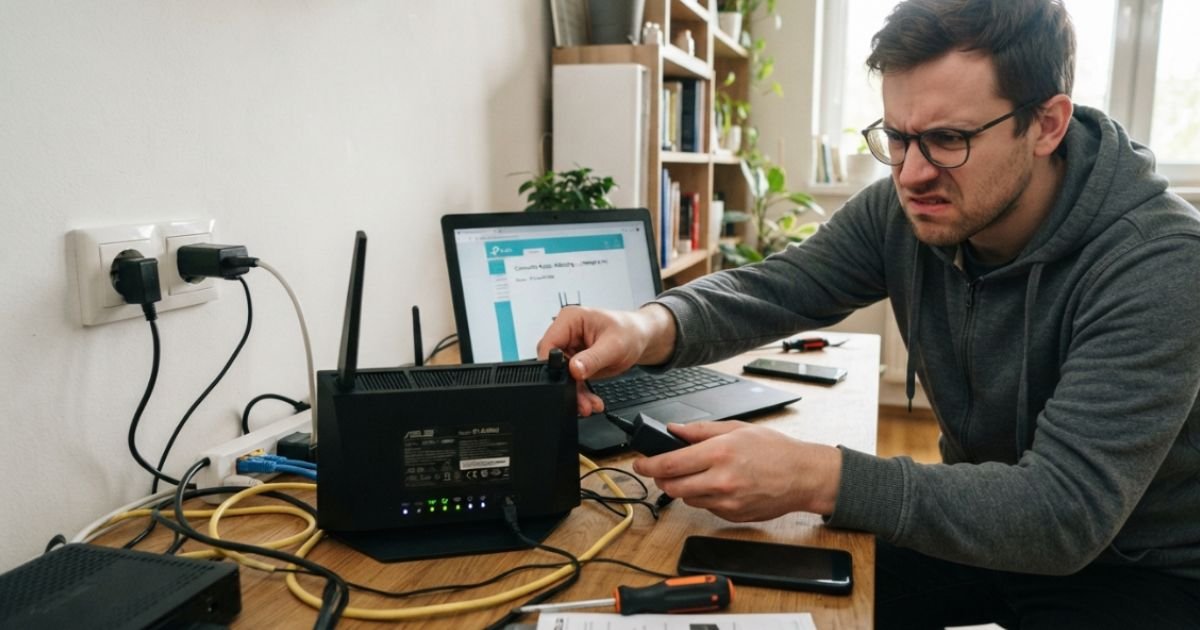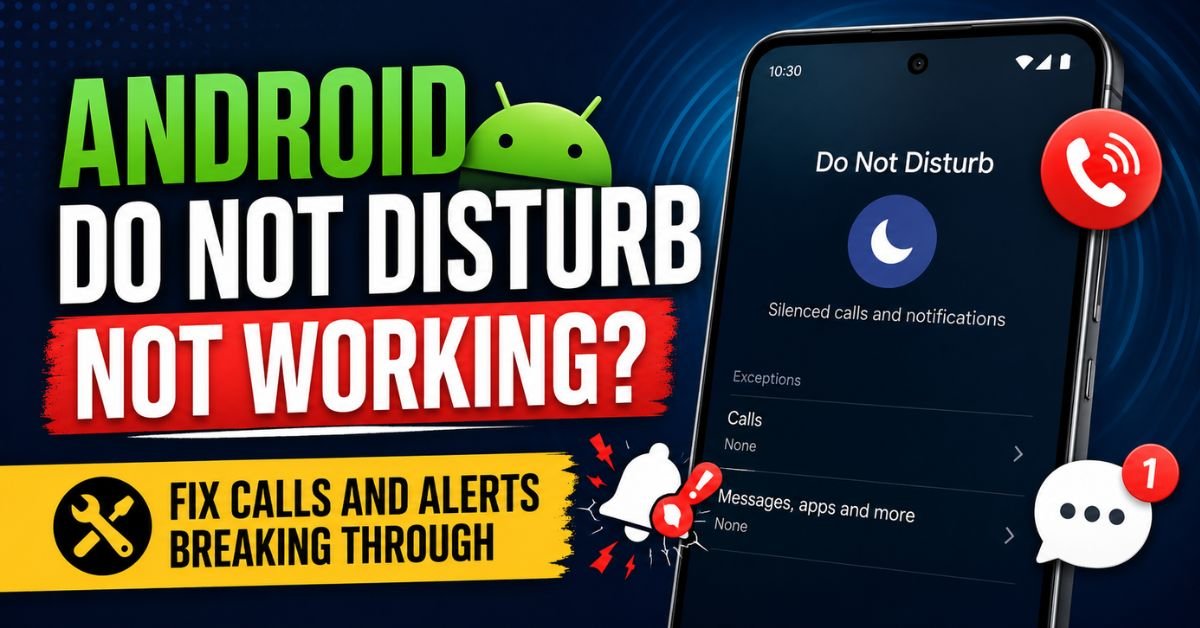
Android Do Not Disturb Not Working? Fix Calls and Alerts Breaking Through.It was 3:14 AM on a Tuesday when my Pixel 7 Pro decided that a promotional email about discounted protein powder was more important than my REM cycle. I had Do Not Disturb (DND) active. I had my “Bedtime Mode” scheduled. Yet, there it was—a sharp vibration and a bright screen lighting up my dark bedroom.
If you’ve ever wanted to throw your phone across the room because it won’t just stay quiet, you’re not alone. Over my eight years of deep-diving into the Android OS, I’ve realized that DND isn’t a simple “off” switch anymore. It’s a complex mesh of Notification Channels, Priority Mode exceptions, and Digital Wellbeing triggers.
When your Android DND is failing, it’s rarely a “bug” in the traditional sense. It’s usually a conflict of interest between different parts of the System UI. Let’s fix that.
Verified on Device: Compatibility Note
This guide has been tested and verified on Google Pixel (Android 14), Samsung Galaxy S23 (One UI 6.1), and OnePlus 11 (OxygenOS 14). While menu names vary slightly, the underlying logic remains consistent across the Android ecosystem.
The ‘Ghost Ring’ Phenomenon: Why Silence Isn’t Always Silent
Most users assume that toggling the DND icon in the Quick Settings panel creates a digital fortress. It doesn’t. In reality, modern Android versions treat DND as a filter, not a wall.
Common myths often lead to frustration. Many believe “Silent Mode” and “Do Not Disturb” are the same. They aren’t. Silent Mode just kills the audio stream; DND manages the actual visibility and behavior of the notification itself. If a notification is breaking through, it’s likely because it has been granted a “VIP pass” somewhere in your User Profile settings.
The 3 AM Emergency That Wasn’t
I remember a specific case on an XDA forum where a user’s phone rang only for specific work contacts despite DND being on. It turned out to be a forgotten “Emergency Bypass” setting within the individual contact card—a setting that overrides almost every system-level silencer.
The ‘People’ Problem: Who is Allowed to Interrupt?
The most common reason for DND “failure” is the Exception List. Android is designed to be smart, but sometimes it’s too smart for its own good.

Identifying ‘Starred Contacts’
Open your settings and navigate to Sound & Vibration > Do Not Disturb > People. Check your “Calls” and “Messages” sections. If this is set to Starred Contacts, anyone you’ve ever “hearted” in your Google Contacts app will bypass DND. I’ve seen people star their local pizza place just to find it easily, only to have a late-night “Order Ready” text wake them up.
The ‘Repeat Callers’ Trap
This is a classic. Android has a default setting called “Allow repeat callers.” If the same number calls you twice within a 15-minute window, the system assumes it’s a life-or-death situation and lets the second call through.
- My Advice: If you have persistent telemarketers who call back-to-back, turn this off. It’s the primary culprit for “ghost rings” at night.
Alarms and Media Exceptions
Under the “Alarms & other interruptions” menu, you’ll find toggles for Alarms, Media sounds, Touch sounds, and Reminders.
- Expert Tip: If you use a white noise app, ensure “Media” is allowed, or your soothing rain sounds will cut out the second DND kicks in. Conversely, if a game is playing an ad in the background (it happens!), it will scream at full volume if “Media” is an exception.
App-Level Overrides: The Hidden Culprits
This is where the technical “heavy lifting” happens. Since Android 8.0, Google introduced Notification Channels. Instead of an app having one “On/Off” switch for notifications, it has dozens of sub-categories.
What are Notification Channels?
Think of WhatsApp. It has a channel for “Group Notifications,” one for “Chat Notifications,” and another for “Critical Alerts.” Each of these can be configured to Bypass Do Not Disturb.
If a specific app keeps buzzing:
- Long-press the app icon and tap the (i) info circle.
- Tap Notifications.
- Tap on the text of the specific notification category (e.g., “Reminders”).
- Scroll down and look for Override Do Not Disturb.
If this is toggled on, that specific category will ignore your DND settings entirely. I once found that a weather app had “Severe Weather Alerts” set to override DND, which is fine—except it considered a “Light Breeze Warning” to be severe.
Bulk-Resetting App Priorities
If you’ve messed with too many settings and can’t find the leak, you can reset all app preferences.
- Go to Settings > System > Reset options > Reset app preferences.
- Warning: This won’t delete your data, but it will reset all notification permissions, background data restrictions, and DND overrides. It’s a nuclear option, but it’s effective.
Schedule Conflicts and Digital Wellbeing Settings
Sometimes DND “breaks” because two different schedules are fighting for control.
The ‘Bedtime Mode’ vs. DND Clash
Digital Wellbeing includes a feature called Bedtime Mode. It can be set to turn on DND automatically. However, if you manually turn off DND while Bedtime Mode is still active, or if you have a separate DND schedule that overlaps, the System UI can glitch, failing to re-engage the silence filter the following night.
Flip to Shhh and Driving Mode
Pixel users have a feature called “Flip to Shhh” (place the phone face down to enable DND). I’ve had cases where a slightly uneven nightstand caused the phone’s accelerometer to think it was being flipped repeatedly, toggling DND on and off in a loop.
Also, check your Google Maps or Android Auto settings. “Driving Mode” often forces a specific DND profile that might have different exceptions than your “Sleep” profile. If the phone’s Bluetooth Metadata suggests you are in a car (even if you’re just sitting in your garage), it might trigger these overrides.
Advanced Technical Fixes for Persistent Glitches
If you’ve checked all the toggles and the phone still rings, we’re looking at a cache or service-level error.
Clearing the System UI Cache
The System UI is the app that manages your status bar, notifications, and DND icons. If its cache is corrupted, the “DND” icon might be on, but the actual process is hung.
- Go to Settings > Apps > See all apps.
- Tap the three dots in the corner and select Show system.
- Find System UI.
- Tap Storage & cache and hit Clear Cache.
- Restart your phone immediately.
Updating Google Play System Services
DND logic is often tied to Google Play Services. If your version is outdated, it might not play nice with newer app API calls that request DND bypasses.
- Go to Settings > Security & Privacy > Updates > Google Play system update. Check for a manual download.
Expert Insight: I’ve noticed a recurring issue on Android 13 and 14 where Haptic Feedback remains active even when sound is disabled. This is often due to the “Vibration & haptics” menu having its own separate logic. If DND is “failing” by vibrating, check Settings > Sound & vibration > Vibration & haptics and ensure “Apply to silent mode” is toggled correctly.
Hands-On Tips for a Bulletproof Setup
To ensure you actually get some sleep, I recommend a “Layered Defense” approach rather than relying on a single toggle.
- Use ‘Priority Only’ Mode: Don’t use “Total Silence” unless you really want to miss your morning alarm. Set your DND to “Priority Only” and strictly audit the “People” and “Apps” sections.
- The Whitelist Strategy: Set “Calls” to “None.” Then, go to your 3-4 most important contacts (spouse, parents, kids) and Star them. Set DND to allow calls from “Starred Contacts” only. This creates a true emergency-only lane.
- Check Bluetooth Connections: Occasionally, a connected smartwatch or a pair of Bluetooth earbuds can “hijack” notification priority. If your watch is set to “Silence phone while wearing watch,” it might be overriding your phone’s manual DND settings in weird ways.
Real-Time FAQs
Q1: Why does my phone still vibrate for emails even though DND is on?
This is almost certainly a Notification Channel override. Gmail or your mail client likely has “High Priority” emails set to “Bypass Do Not Disturb.” Go into the app’s notification settings, tap the specific account, and check the “Bypass DND” toggle for each category.
Q2: Can I make DND turn off automatically when my alarm goes off?
Yes, but it depends on your version. In Digital Wellbeing > Bedtime Mode, there is an option to “Turn off Bedtime mode at next alarm.” This is the most reliable way to sync your silence with your wake-up call.
Q3: I have “Allow Repeat Callers” off, but a second call still gets through. Why?
Check if you have any third-party “Call Blocker” or “Spam Protection” apps (like Truecaller). These apps often have their own internal permissions that can trigger the System UI to wake up the screen or play a ringtone, bypassing the native Android DND.
Q4: Why do some apps still show “Heads-up” banners during DND?
Under DND > Display options for hidden notifications, you might have it set to “No sound from notifications, but still show on screen.” Change this to “No visuals or sound from notifications” to prevent the screen from waking up and showing banners.
Q5: Does “Do Not Disturb” affect my Google Assistant routines?
It can. If your routine involves the Assistant speaking out loud, and “Media” is not an exception in your DND settings, the Assistant will perform the actions (like turning on lights) but will remain silent, making it seem like the routine failed.
Summary from the Workbench: Android’s DND is a masterpiece of granularity, but that’s also its downfall. If calls or alerts are breaking through, don’t blame a “bug” immediately. Look for the Priority Mode exceptions, the Repeat Caller rule, or a rogue Notification Channel.
I’ve spent a decade tweaking these devices, and 99% of the time, the “ghost in the machine” is just a forgotten toggle in a sub-menu. Take ten minutes to audit your “Exception List” today—your sleep schedule will thank you.