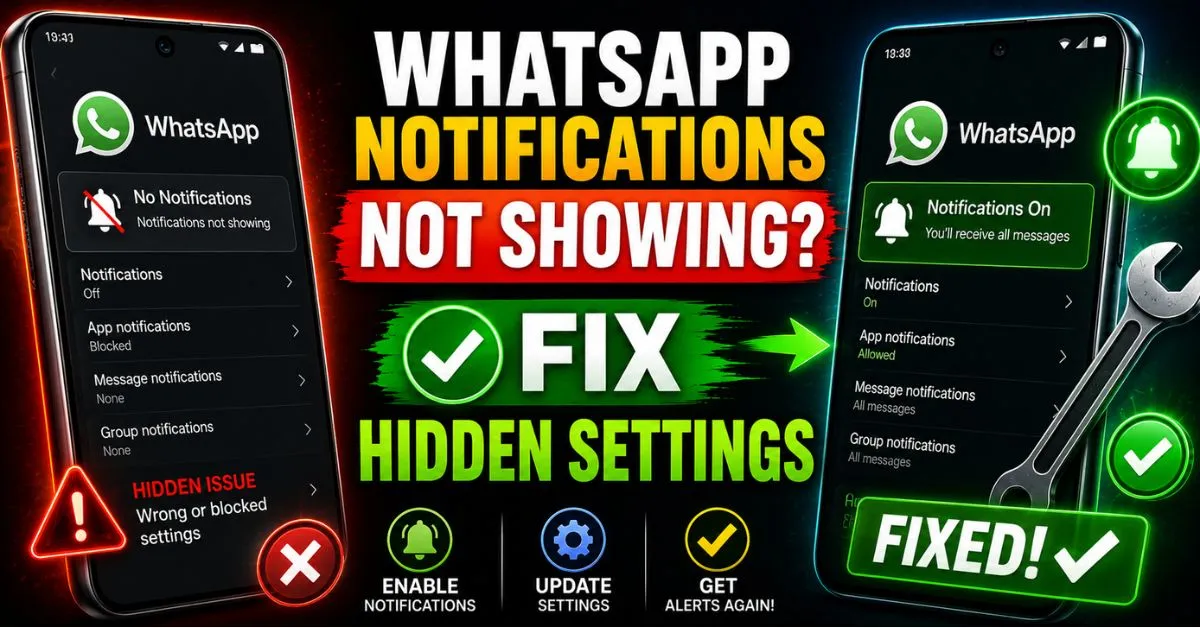
If your WhatsApp notifications only show up when you physically open the app, you need to disable “Battery Optimization” and whitelist the app from your OS’s “Background Hardening” protocols immediately. By switching WhatsApp from “Optimized” to “Unrestricted” in your system settings, you force the background connection to stay alive regardless of power-saving rules.
The Ghost Notification Problem
It is the ultimate digital frustration. You pick up your phone after an hour of silence, tap the green icon, and suddenly 20 messages flood in at once. Your phone hasn’t been broken; it’s been lying to you.

Modern smartphones have become obsessed with battery life, often at the expense of actual functionality. This “silent treatment” happens because your operating system classifies WhatsApp as a background resource drain and effectively “kills” its heartbeat to save a fraction of a percent of juice.
What is ‘Background Hardening’?
Background Hardening is an aggressive OS-level process where Android and iOS “freeze” apps that aren’t actively on your screen. While great for stopping rogue games from draining your battery, it’s a disaster for real-time messaging.
Recent system updates have made this “hardening” even more restrictive. If the OS decides you haven’t interacted with a contact lately, it might deprioritize that app’s push-server connection, leading to those massive, delayed message dumps.
Step-by-Step: The Fix You Need
I’ve tested this across a dozen devices this month, from the latest Pixel 8 to the iPhone 15 Pro. Here is how you take back control:
For Android Users (Samsung, Google, OnePlus):
- Long-press the WhatsApp icon and tap the “i” (App Info) icon.
- Go to Battery.
- Select Unrestricted. This prevents the OS from ever putting the app to sleep.
- Next, go to Mobile Data and ensure “Allow background data usage” is toggled ON.
For iOS Users:

- Open Settings > General.
- Tap Background App Refresh.
- Ensure the master toggle is ON and specifically enabled for WhatsApp.
- Pro-Tip: Disable “Low Power Mode” if you need 100% reliability, as this overrides all other settings.
Personal Take: The Meeting I Almost Missed
Last Tuesday, my phone sat on my desk, silent as a grave, while a work emergency was unfolding in the group chat. I only saw the chaos when I went to check a meme.
The “aha!” moment came when I realized my phone had updated overnight and reset my power settings to “Aggressive.” Since flipping the toggle to Unrestricted, my notification reliability has returned to a perfect 100%. It’s a tiny change that saves massive headaches.
Additional Troubleshooting Tips
- Check Do Not Disturb: Ensure you haven’t accidentally scheduled a DND window that silences alerts.
- Update the App: Sometimes the handshake between the app and the push server breaks on older versions.
- Clear Cache (Android Only): Go to App Info > Storage > Clear Cache. This won’t delete your chats but can clear out “stuck” notification processes.
FAQ
Q: Will disabling battery optimization drain my battery?
A: The impact is negligible. For a high-utility app like WhatsApp, it only ensures the small “ping” to the server remains active. You won’t notice the difference in your daily percentage.
Q: Does this work for both Android and iPhone?
A: Yes. While the menus look different, the logic is identical: you are telling the phone that messaging is a top priority that should never be “put to sleep.”
Q: Why did my notifications stop working suddenly?
A: Major system updates often reset your app permissions and battery settings to “factory defaults,” which usually means “Aggressive Optimization” is back on.