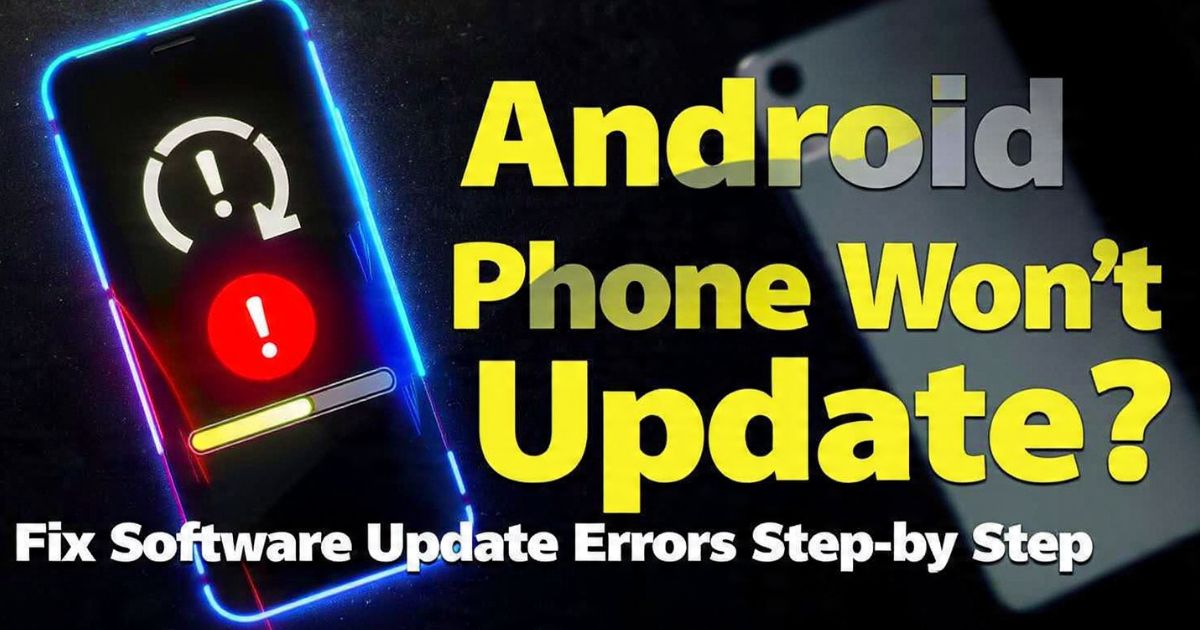
If you’re staring at an Android phone won’t update notification or a progress bar that hasn’t moved since breakfast, I feel your pain. It’s not just about getting the latest emojis or a fresh UI; it’s a security risk. Outdated firmware leaves your Android Operating System vulnerable to exploits that those monthly security patches are designed to plug.
Whether you’re dealing with an Android software update issue on Samsung Galaxy, a stubborn OnePlus, or a Xiaomi device that refuses to check for updates, I’ve spent years at the “troubleshooting bench” figuring out exactly why these Over-the-Air (OTA) updates fail. Let’s get your phone back on track.
I still remember the sinking feeling in my gut last Tuesday. There I was, coffee in hand, ready to finally see what the Android 15 buzz was all about on my Pixel. I tapped “Download and Install,” watched the progress bar crawl to 42%, and then—bam—the dreaded “Installation failed” message popped up. No explanation. No code. Just a dead end.
Also Reade : Complete Android Fix Guide: Every Android Problem Solved (2026)
The Basics: Preliminary Checks You Might Have Missed
Before we dive into the “Matrix-level” technical stuff, we have to rule out the silly mistakes. You’d be surprised how many times an Android update failed fix was simply plugging the phone into a charger.
The 50% Battery Rule
Your phone is smarter than you think. If your battery is below 50%, most manufacturers (especially Samsung and Google) will block the installation. Why? Because if your phone dies while writing new firmware to the system partition, you end up with a “brick”—a very expensive paperweight. I’ve seen an Android update issue due to insufficient battery happen even when the phone was at 40%. Plug it in. Better yet, keep it on the charger throughout the process to avoid an Android update interrupted error.
Wi-Fi Connectivity vs. Metered Connections
Is your Android update download paused? Check your Wi-Fi. If you’re using a public hotspot or a “Metered” connection, Android often pauses large downloads to save you from a massive data bill.

- Pro Tip: Go to your Wi-Fi settings, tap the gear icon next to your network, and ensure “Treat as unmetered” is selected.
- Avoid an Android update issue because of weak WiFi by standing right next to your router. A single “packet drop” can cause an Android update package corrupted fix scenario later on.
The “Invisible” Storage Gap
This is the big one. An Android update issue because of low storage isn’t always obvious. If an update is 2GB, you actually need about 4GB to 6GB of free space. The phone needs room to download the Android Package (APK), unpack it, and then run the installation script. If your Android system update is not downloading, go to Storage Management and delete those 4K videos you forgot you took at that concert three months ago.
Software Fixes: Clearing the Digital Gunk
If your hardware and connection are fine, the problem is likely a corrupted bit of data in your system apps. This is where we start looking at Google Play Services and the internal update frameworks.
Resetting Google Play Services Cache
Google Play Services is the “glue” that holds Android together. If its cache is bloated or corrupted, you’ll see an Android update verification failed message.
- Open Settings > Apps.
- Find Google Play Services.
- Tap Storage and then Clear Cache.
- Don’t be afraid to Clear All Data here too—it won’t delete your photos, but it might force you to sign back into a couple of things.
The “Clear Data” Trick for System Updates
Sometimes the update app itself gets confused. On many phones, this is a hidden system app.
- In the Apps menu, tap the “Show System Apps” option (usually under a three-dot menu).
- Look for System Update or Software Update.
- Clear its cache and data.
- This often fixes an Android software update stuck at 0% or an Android update server error.
The VPN and Ad-Blocker Conflict
I once spent three hours trying to fix an Android update issue because of VPN. The VPN was routing my traffic through a server in Germany while I was in the US. The update server saw the mismatch and blocked the request. If you have a VPN or a system-wide ad-blocker like AdGuard, turn them off completely before checking for updates.
Hands-on Case Study: The “Hidden” App Conflict
A few months ago, a friend brought me a OnePlus phone that was stuck at preparing update. We tried everything. It turned out a third-party “Custom Font” app was modifying system files in a way that the OTA update safety check didn’t like. Once we uninstalled that app and reverted to the default theme, the update sailed through. If you have a third party launcher or heavily modified themes, revert to stock before trying again.
Advanced Troubleshooting: Recovery Mode and Desktop Tools
If the standard menus aren’t helping, we need to go “under the hood.”
Wiping the Cache Partition
Unlike a Factory Reset, wiping the Cache Partition doesn’t delete your photos or apps. It just clears out the temporary system files. This is a godsend for fixing an Android update issue due to corrupted cache.
- For Samsung: Power off. Connect to a PC via USB (yes, this is required for newer One UI versions). Hold Volume Up + Power until the logo appears.
- For Pixel: Power off. Hold Volume Down + Power. Use volume keys to select Recovery Mode. When the “No Command” robot appears, hold Power and tap Volume Up once.
- Select Wipe Cache Partition and then reboot. This often fixes the Android update freezing problem.
Using Manufacturer Tools
Sometimes the Android phone is not checking for updates because the carrier (like Verizon or AT&T) is lagging behind. You can bypass this using a computer.
- Samsung Smart Switch: Download this on your PC/Mac. Plug in your phone. If an update is available, Smart Switch will often find it even if your phone says it’s up to date. This is the best Android update troubleshooting Samsung method.
- Pixel Update Tool: Google has a web-based tool (flash.android.com) that can help you force an update or even adb sideload the latest firmware directly.
Expert Insight: If you’ve ever played around with a custom ROM or have an unlocked bootloader, your OTA updates will almost certainly fail. The system does a “SafetyNet” check; if it sees modified system files, it will abort to prevent a boot loop. You’ll need to flash the factory image manually to get back on the official track.
Common Pitfalls and Real-World Scenarios
The “Optimizing Apps” Loop
Is your Android update stuck at optimizing apps? This usually happens after a major version jump (like Android 14 to Android 15). The system is recompiling every app to work with the new OS. Wait. I’ve seen this take 45 minutes on older Motorola or Realme phones. If it’s been three hours, then you have a problem.
Android Update Issue After Security Patch
Sometimes a specific security patch has a bug. If your Android phone is not updating after reboot, it might be that the patch failed the “checksum” (a digital signature check). This is common with Android update issue with dual SIM phones where the modem firmware fails to align. The only fix here is usually waiting for the manufacturer to push a “hotfix” or using a desktop tool to flash the previous version.
Malware and Background Apps
If your phone is running hot, you might have an Android update issue because of background apps or even malware. Malicious scripts often disable system update services to prevent being patched out. Run a scan with a reputable tool and check your Developer Options to see if any weird “Mock Location” or “Debugging” features are active.
What to Do if Nothing Else Works
If you’ve cleared the cache, tried the desktop tools, and you’re still seeing Android update installation failed, we have to face the hard truths.
The Hardware Bottleneck
Phones don’t last forever. If you have an older Oppo or Vivo device, it might simply be at the end of its life cycle. However, if the phone is relatively new, an Android update issue due to motherboard problem or a damaged SD card (if used as internal storage) could be the culprit. I once saw an Android update issue after water damage where the phone worked fine but the internal storage had “read-only” sectors that prevented updates.
The Last Resort: Factory Data Reset
I hate suggesting it, but a Factory Reset is the “nuclear option” that works 90% of the time. It wipes away every conflicting setting and app conflict.
- Before you do this: Back up your Google Account, photos, and WhatsApp chats.
- After the reset: Don’t restore your apps immediately. Try the update on a “clean” phone first. If it works, then bring your data back. This fixes the Android update issue after factory reset loop.
Contacting Support
If you’re still stuck on the Android phone stuck on update screen, and even a reset didn’t work, it’s time to call in the pros. Mention that you’ve already tried Recovery Mode and Wiping the Cache Partition—it’ll save you 20 minutes of explaining to the support agent.
Updating your phone shouldn’t feel like performing open-heart surgery. Usually, it’s just a matter of giving the system enough “breathing room” (storage and battery) and clearing out the old temporary files. If your Android update is not responding quickly, take a breath, plug it in, and try the Smart Switch or Pixel tool route. You’ve got this!
Disclaimer: Manually flashing firmware or using ADB tools can be risky. Always follow official manufacturer guides and back up your data before attempting advanced fixes.