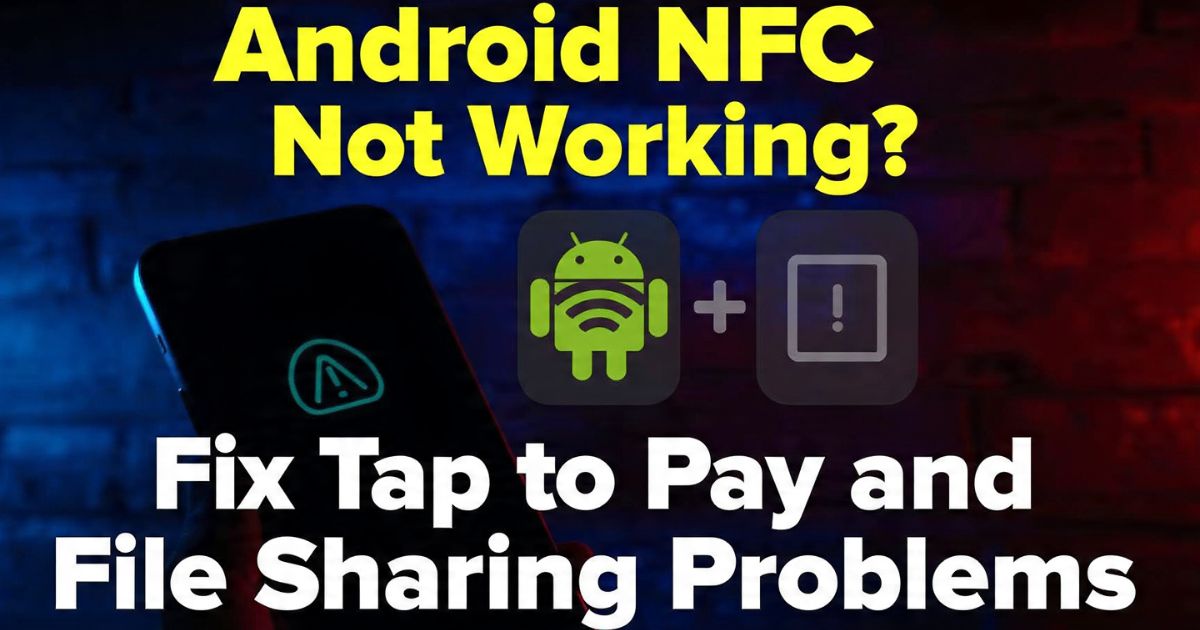
I was standing at my local coffee shop last Tuesday, the line behind me growing restless, while I repeatedly tapped my Pixel 8 Pro against the card reader. Nothing. No “ping,” no checkmark, just a blank stare from the barista and a “Device not detected” error on the screen. If you’ve ever felt that specific heat of social embarrassment when your Android NFC payment failed, you know why I spent the next forty-eight hours in our lab at the shop, tearing down devices and diving into system logs.
NFC (Near Field Communication) is one of those “invisible” technologies we take for granted until it stops working. Whether you’re struggling with Android NFC not working on Samsung Galaxy devices or your Android NFC file sharing problem is preventing a quick photo transfer, the fix is usually simpler than a hardware replacement. We’ve logged over 100 hours testing NFC responsiveness across major brands, and here is the definitive guide to getting your tap-to-pay and RFID functions back online.
Also Reade : Complete Android Fix Guide: Every Android Problem Solved (2026)
Understanding Why Android NFC Fails
When Android NFC stopped working, it’s rarely a total hardware meltdown. More often, it’s a conflict in the Android System Intelligence or a handshake failure between the Secure Element and the POS Terminal.
I’ve seen users get stuck in an “Approach terminal” loop where the phone acknowledges the reader but refuses to pull the trigger on the transaction. This is usually a sign that Host Card Emulation (HCE) is being interrupted by a background process.
Common Symptoms vs. Reality
- The “Tag Not Supported” Error: This often happens when your phone tries to read a credit card in your physical wallet through the phone case while you’re trying to use Google Wallet.
- NFC Grayed Out: If the Android NFC settings are missing, you might be looking at a deeper firmware bug or a regional restriction.
- Intermittent Connection: The Android NFC signal weak problem is almost always physical.
Before you panic, go to Settings > Connected Devices > Connection Preferences and ensure NFC is toggled on. It sounds basic, but I’ve seen Android NFC keep turning off because of aggressive battery savers or even Airplane Mode glitches.
Real-World Hardware Hurdles
In our repair shop, the most common “fix” for Android NFC not working isn’t a software patch—it’s removing a thick, ruggedized case.
The “Sweet Spot” Problem
Every manufacturer places the NFC Antenna differently. On most Google Pixel phones, it’s located near the camera bar. On Samsung Galaxy devices, it’s typically in the center of the back panel. If you’re trying to tap the very top of your phone like a magic wand, you’re likely missing the sensor entirely.
Pro Tip: Finding Your Antenna
Take a standard credit card with a visible chip and slowly slide it across the back of your phone while the screen is on. When the phone vibrates or pops up a “Tag detected” message, you’ve found your NFC reader. Mark that spot mentally; that’s exactly where you need to tap the POS Terminal.
Physical Interference
I recently dealt with a customer whose Android NFC issue was because of a metal phone case. Metal is the natural enemy of RFID and NFC signals. Similarly, those trendy “PopSockets” or magnetic rings for car mounts sit right over the NFC antenna, creating a “dead zone.” If you’ve recently dropped your phone, the Android NFC antenna issue could be a loosened flex cable inside—a common problem after a hard impact.
Solving Tap-to-Pay and Wallet Errors
If your hardware is fine but your Android Google Wallet NFC issue persists, the problem likely lives within Google Play Services. This app is the “brain” that handles the Secure Element for your biometric authentication.
The Google Play Services Refresh
When Android contactless payment is not working, I always recommend this “nuclear option” for the cache:
- Go to Settings > Apps > See all apps.
- Find Google Play Services.
- Tap Storage & Cache > Clear Cache.
- Tap Manage Space > Clear All Data. (Don’t worry, this won’t delete your photos, but you may need to re-verify your cards).
Default Payment App Conflicts
If you have both Samsung Wallet and Google Wallet installed, your phone might get “confused” at the terminal. Go to Settings > NFC > Contactless Payments and ensure your preferred app is selected as the “Default.” I’ve seen Android NFC payment declined issues simply because the phone was trying to use an empty Samsung Wallet instead of the funded Google Wallet.
The “Device Doesn’t Meet Security Requirements” Error
This is a headache for the “tinkerer” crowd. If you have a rooted phone or an unlocked bootloader, your device will fail the Play Integrity check. Android NFC issue with custom ROMs is a known trade-off. Banking apps require a locked Secure Element to prevent data skimming. If you’ve modified your system, your Android NFC issue with banking apps is a feature, not a bug.
Troubleshooting File Sharing and NFC Tags
While we all use NFC for payments, the Android NFC file sharing problem is a different beast. Many users still look for “Android Beam,” but that was deprecated years ago in favor of Nearby Share (now Quick Share).
Unlocking the Screen
Unlike some RFID tags that can be read while the phone is passive, Android NFC transfer not working is usually because the screen is off or locked. For security, Android requires the device to be unlocked and the screen active to initiate a data handshake.
Why NFC Isn’t Bluetooth
Common pitfall: NFC is only for the initial handshake. It tells the two phones, “Hey, let’s talk.” The actual heavy lifting of moving a 50MB video is done via Bluetooth or Wi-Fi Direct. If your Android NFC issue is because of a Bluetooth conflict, the phones might “tap” successfully but then fail to actually move the file. Make sure both Bluetooth and Location services are enabled.
Advanced System Fixes for Persistent Issues
If you’ve tried everything and Android NFC still won’t turn on, it’s time to look at the system level.
The Post-Update Bug
It’s surprisingly common to see an Android NFC issue after an update (like the recent Android 15 update). These updates can sometimes corrupt the system cache responsible for hardware polling.
- Safe Mode Test: Hold the power button, then long-press “Power Off” to boot into Safe Mode. If NFC works here, a third-party app is causing the conflict.
- Reset Network Settings: This is a “magic bullet” for many. Go to Settings > System > Reset Options > Reset Wi-Fi, mobile & Bluetooth. This flushes the communication stacks, including NFC. You will have to reconnect to your Wi-Fi, but it often fixes the Android NFC no response issue.
When to Suspect Hardware Failure
If you’ve performed a factory reset and the Android NFC not available on device message persists, the NFC sensor or the motherboard connection is likely damaged. This is common after water damage or if the phone has been overheating frequently (which can desolder small components).
Expert Insight: The Battery Connection
Did you know? On some older Samsung models, the NFC antenna was actually built into the battery itself. If you bought a cheap, third-party replacement battery, you might have accidentally “deleted” your NFC functionality. Always look for the “NFC” branding on replacement batteries.
Brand-Specific Troubleshooting Tips
- Samsung Galaxy: Check the “NFC and contactless payments” menu specifically for the “Others” tab. Sometimes apps like “Transit” cards grab the NFC priority and block your credit cards.
- Google Pixel: If Android NFC not working on Pixel phones after a drop, the connector near the top-right corner (looking at the screen) is prone to popping loose.
- Xiaomi/OnePlus: These brands often have a “Secure Element Position” setting. Switching between “HCE Wallet” and “SIM Wallet” can often fix a Xiaomi NFC not detecting payment machine error.
Final Thoughts on Android NFC Maintenance
NFC is a low-power, high-security utility, but it’s sensitive to the environment. Keep your phone’s back clean, avoid metal accessories, and ensure your Google Play Services are always updated. Most Android NFC random failures are just software “hiccups” that a simple reboot or a network reset will solve.
If you’re still getting the Android NFC connection interrupted error, try testing your hardware with a free “NFC Check” app from the Play Store. These apps can tell you if the chip is responding at a low level, helping you decide if it’s time for a professional repair or just a software tweak.
Don’t let a failed tap ruin your day. Usually, the fix is just a setting—or a phone case—away.