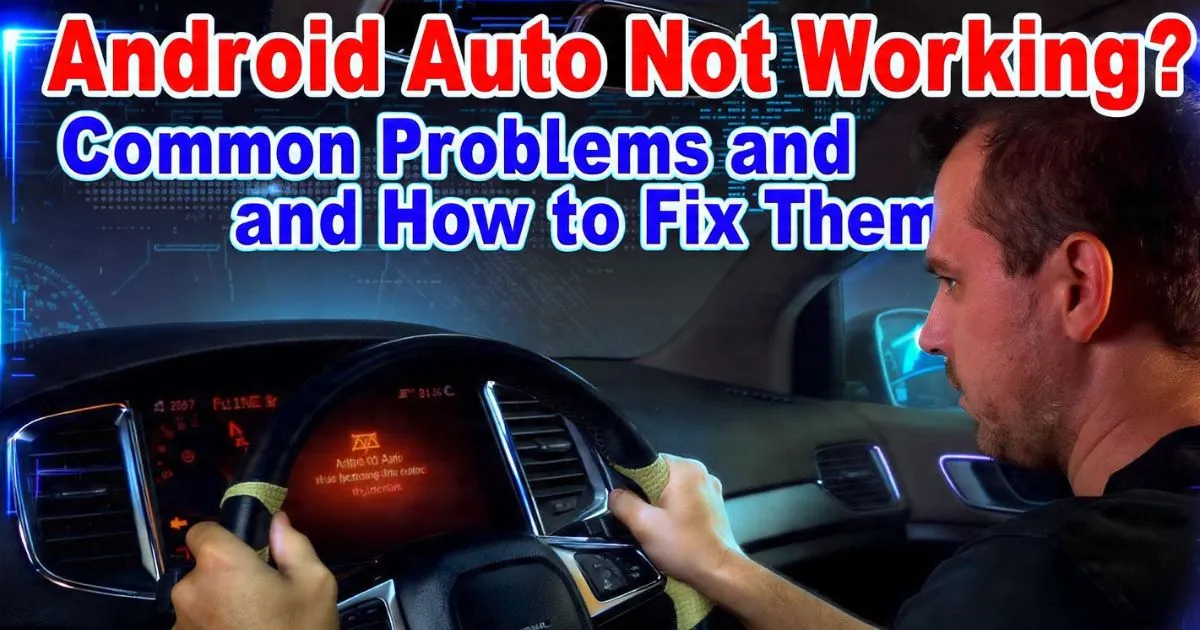
If you’re here, you’re likely feeling that same spike of blood pressure. Android Auto is brilliant when it works, but when it fails, it feels like the car’s brain has been scooped out. Whether you’re dealing with Android Auto not connecting via USB, or your Android Auto wireless keeps disconnecting Samsung style, I’ve been through the trenches. I’ve spent hours debugging Sync 3, MBUX, and Mazda infotainment systems.
Let’s fix this. This isn’t a generic “restart your phone” guide (though, seriously, do that first). We’re going deep into the firmware, the USB-C specs, and those hidden developer mode troubleshooting tricks that actually move the needle.
I remember sitting in my driveway three years ago, trying to head out for a 6-hour road trip to the coast. I had my coffee, my snacks, and my playlist ready. I plugged my Samsung Galaxy into my Honda Civic’s USB port, and… nothing. The screen stayed black. I unplugged it, plugged it back in, swapped the cable, and still, the infotainment system stared back at me like a cold, dead piece of plastic.
Also Reade : Complete Android Fix Guide: Every Android Problem Solved (2026)
also reade : Android Phone Has No Sound, Android Bluetooth Not Working, Android Camera Not Working, Android Apps Keep Crashing Android Microphone Not Working
Hardware First: It is Usually the Cable (Seriously)
I know, you think your cable is fine because it charges your phone. That is the biggest lie in the tech world. A cable that can “fast charge” might be absolutely garbage at high-speed data transfer. Android Auto requires a high-bandwidth connection to stream video and audio simultaneously while handling touch inputs.
The “Tug-Test” and Lint Management
Most Android Auto connection problems stem from the physical port. If your Android Auto disconnects on bumps, it’s not a software bug; it’s physics. Pocket lint gets compressed into the bottom of your phone’s USB-C port every time you plug it in. Eventually, the cable can’t seat fully.
Pro Tip: Take a wooden toothpick or a non-metallic thin tool and gently scrape the bottom of your phone’s port. You’d be surprised at the “felt” you’ll pull out. If the cable doesn’t “click” into place, that’s your problem.
Finding the Best USB Cable for Android Auto Connection
Don’t use the cheap uncertified cables from the gas station. They lack the shielding required to prevent interference from the car’s electrical system. Look for a cable rated for USB 3.0 or higher. If you’re using an older phone, ensure it’s a high-quality data transfer cable. If you are seeing Android Auto USB device not recognized, try the original cable that came with your phone.

Software Deep Dive: App Settings and Updates
If the hardware is solid but Android Auto is not showing on car screen, we need to look at the software handshake.
Why Google Play Services Matters
Android Auto isn’t just a standalone app; it’s a framework that relies heavily on Google Play Services. If Play Services is out of date or its cache is corrupted, the “handshake” between the phone and the Head Unit fails.
How to fix Android Auto connection problems via settings:
- Go to Settings > Apps > Google Play Services.
- Tap Storage and then Clear Cache.
- Do the exact same for the Android Auto app.
Android Auto Keeps Stopping on Samsung Phones
Samsung users often run into a specific issue where the phone’s aggressive battery optimization kills the app. If you’re wondering why is Android Auto not working on Samsung Galaxy, check your “Sleeping Apps” list. Make sure Android Auto is set to “Unrestricted” in the battery settings. This prevents the OS from “optimizing” the connection into oblivion while you’re driving.
The Car Side: Troubleshooting the Head Unit
Sometimes your phone is screaming, “I’m ready!” but your car’s infotainment system is looking the other way. This is common in Toyota, Honda Civic, and Ford vehicles (especially those running older Sync versions).
The Forced Restart
Every Head Unit is basically a tablet embedded in your dash. Sometimes they hang.
- Honda/Acura: Usually involves holding the Power/Volume knob for 10 seconds.
- Ford Sync 3: Hold the ‘Next Track’ button on the dash and the ‘Power’ button simultaneously.
- Mazda: Hold the Back button, Nav button, and Mute button at the same time.
Check for Firmware Updates
If your Android Auto wireless not working after update (specifically after moving to Android 14 or the new Android 15), your car might need a software patch. Dealers often don’t perform these unless you ask. Some cars allow for OTA (Over-The-Air) updates via your home Wi-Fi. Check your car’s “System Information” menu for an update option.
Developer Options: Advanced Tweaks for Power Users
If you’re still stuck with an Android Auto black screen or Android Auto lagging and slow response, it’s time to unlock the hidden menus.
- Open Android Auto settings on your phone.
- Scroll to the bottom and tap Version 10 times until you see a prompt to enable Developer Mode.
- In the top right menu (three dots), select Developer Settings.
Pro-Tip: Force 1080p and USB Debugging
Some infotainment systems struggle to negotiate the resolution, resulting in an Android Auto screen resolution issue where everything looks pixelated. In Developer Settings, try forcing “Video Resolution” to 1080p.
Also, enabling USB Debugging (found in your main phone’s Developer Options) can sometimes bypass the “Communication Error 16” or the Android Auto failed to start error. It changes how the phone handles the USB handshake, often making it more stable.
Expert Insight: If you’re using an aftermarket stereo like a Pioneer or Kenwood, check if MirrorLink is enabled. Sometimes MirrorLink and Android Auto fight for control over the USB port. Disabling MirrorLink usually clears the path for Android Auto to launch properly.
Specific App Issues: Spotify, Maps, and Waze
Is the interface working but your media isn’t? Android Auto Spotify not working or Android Auto Google Maps not working are usually permission issues.
- No Sound? Check if your Android Auto Bluetooth connection issues are interfering. Android Auto uses USB for data but often relies on Bluetooth for the “phone call” profile. If your Android Auto microphone not working in car, ensure your phone is properly paired via Bluetooth and USB.
- Waze Crashing? This often happens if the app is trying to run in a battery-optimized state. Turn off “Battery Optimization” specifically for Waze.
- GPS Lag? If you have an Android Auto lagging problem with navigation, make sure your phone has a clear view of the sky or that the car’s GPS antenna (if supported) is being used.

Wireless Android Auto: The Ghost in the Machine
Android Auto wireless not working is a different beast. It uses a combination of Bluetooth (for the handshake) and 5GHz Wi-Fi (for the data).
If your Android Auto wireless adapter not working (like an AAWireless or Motorola MA1), the first thing to check is Wi-Fi interference. If you’re in a dense city area, 5GHz signals can get crowded.
Quick Fix for Wireless Drops:
- Forget the Bluetooth pairing on both the car and the phone.
- Reset the Android Auto WiFi connection by toggling Airplane mode.
- Re-pair from scratch.
- Ensure Android Auto wireless is actually enabled in the app settings. Surprisingly, sometimes a system update toggles this off.
The “Android 15” Update Headache
Whenever a new version of Android drops, things break. If you’re dealing with Android Auto not working after Android 15 update, you aren’t alone. Usually, Google has to push a secondary update to Google Play Services to fix the API breaks.
If you’re desperate, you can go to APK Mirror and download a previous version of the Android Auto app. This is a “pro” move and should be done with caution, but rolling back a version has saved my navigation on more than one occasion when a “stable” update was anything but.
Common Pitfalls and What to Avoid
- Using a USB Hub: Never use a USB hub in your car. It splits the bandwidth and will almost certainly cause Android Auto disconnects randomly.
- Overheating: If your phone is in a wireless charging cradle while running Android Auto, it will overheat. When a phone gets too hot, it throttles the CPU, leading to Android Auto frozen screen troubleshooting sessions.
- Ignoring Permissions: If you see Android Auto not reading messages or the Android Auto assistant not responding, it’s usually because the “Notification Access” or “Microphone” permission was revoked during an update.
Final Thoughts: Getting Back on the Road
Fixing Android Auto connection problems is often a process of elimination. Start with the cable, move to the cache, and then look at the car’s head unit.
If you’ve tried everything—clearing the cache partition, replacing the USB-C cable with a $20 high-speed one, and even the Android Auto developer mode troubleshooting—and it still won’t connect, it might be time to visit the dealer for a firmware check. Infotainment hardware can fail, though it’s rare.
Android Auto not responding after plugging in phone is a frustration no one needs when they’re trying to get to a meeting or start a vacation. Take a breath, grab a toothpick to clean that port, and try a fresh cable. 90% of the time, that’s your fix.
Quick Summary Checklist:
- Clean the USB-C port (lint is the enemy).
- Use a high-quality data-transfer cable (no gas station specials).
- Clear cache for Android Auto & Google Play Services.
- Disable Battery Optimization for the app.
- Restart the Car’s Head Unit.
Safe driving, and may your maps always be lag-free!