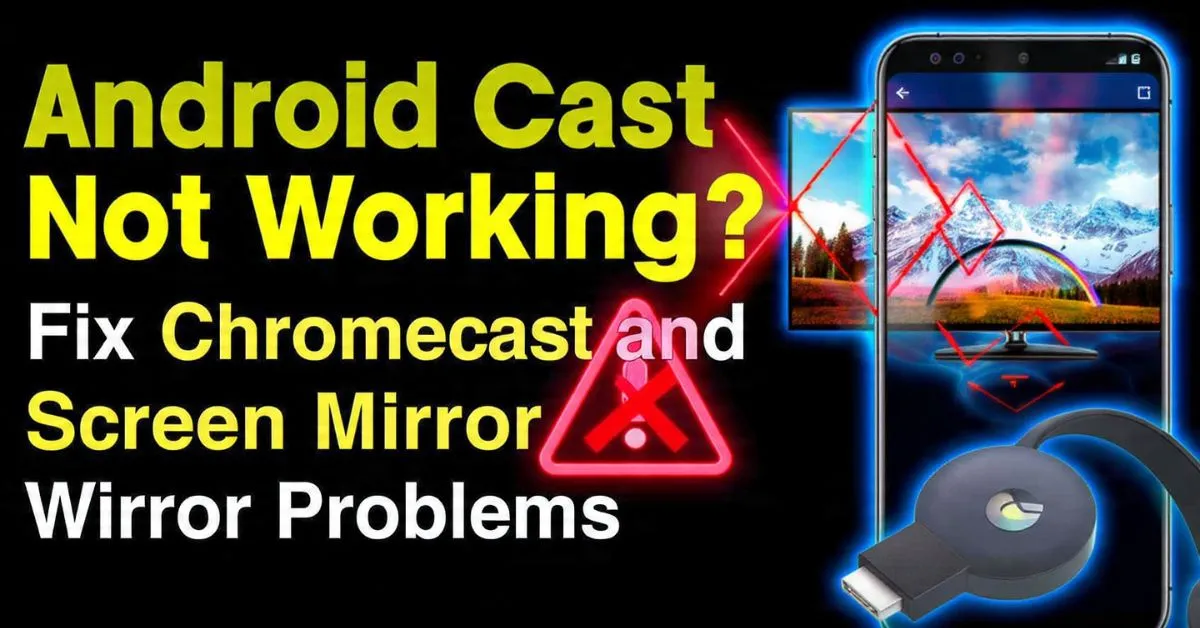
I’ve been there. You’ve got the popcorn ready, the lights are dimmed, and you’re all set to beam that new Netflix series from your phone to the big screen. You reach for the cast icon, but it’s either missing, grayed out, or—my personal favorite—you tap it and absolutely nothing happens. Your phone just stares back at you while the TV remains a void of “No Signal.”
Having spent years tinkering with every Android flagship from the early Nexus days to the latest Pixel 9 and Samsung S24 Ultra, I can tell you that when Android Cast is not working, it’s rarely a “broken” device. Usually, it’s a tiny, annoying handshake issue between your phone, your router, and the TV.
In this guide, I’m going to walk you through how to fix Chromecast and screen mirroring problems using the exact steps I use when my own setup decides to act up. No fluff, just the hard-earned fixes I’ve tested across Google TV, Roku, Fire TV, and those finicky Samsung Smart Views.
Also Reade : Complete Android Fix Guide: Every Android Problem Solved (2026)
Introduction: Why Your Android Won’t Cast
Before we dive into the deep settings, we need to understand the “why.” Usually, it’s one of three things: a network mismatch, a software glitch in Google Play Services, or a permission that got revoked during an update (looking at you, Android 14 and 15).
There is also a huge distinction people miss: Google Cast vs. Miracast. If you are trying to cast to a Chromecast or a Google TV, you’re using Google’s proprietary protocol. If you’re trying to mirror your screen to an older Roku or a basic “Smart Display,” you might be using Miracast or Wi-Fi Direct. They work differently, and knowing the difference is half the battle.
The Quick Checklist (Do these first!)
I know it sounds basic, but I’ve seen 50% of “broken” casting fixed by these:
- Toggle Airplane Mode: It resets the radio stack. Flip it on for 10 seconds, then off.
- Check Bluetooth: Believe it or not, the Google Home App uses Bluetooth to “find” nearby Chromecasts before switching to Wi-Fi. If it’s off, your device might stay hidden.
- The 5-Minute Power Cycle: Unplug the TV and the Chromecast from the wall. Not just “off” with the remote—unplug them. It clears the local RAM.
The Network Handshake: Solving Connectivity Basics
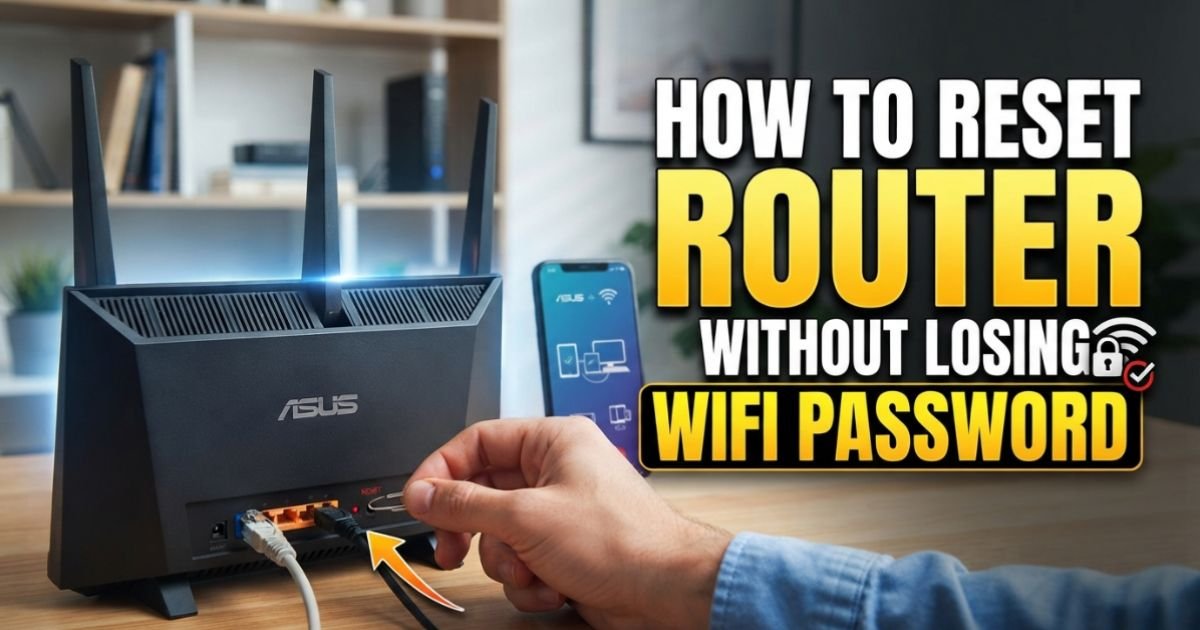
If your Android cast device is not found, the culprit is almost always your router. We live in a world of “Dual Band” Wi-Fi, which is great for speed but a nightmare for casting.
The “SSID” and Frequency Mismatch
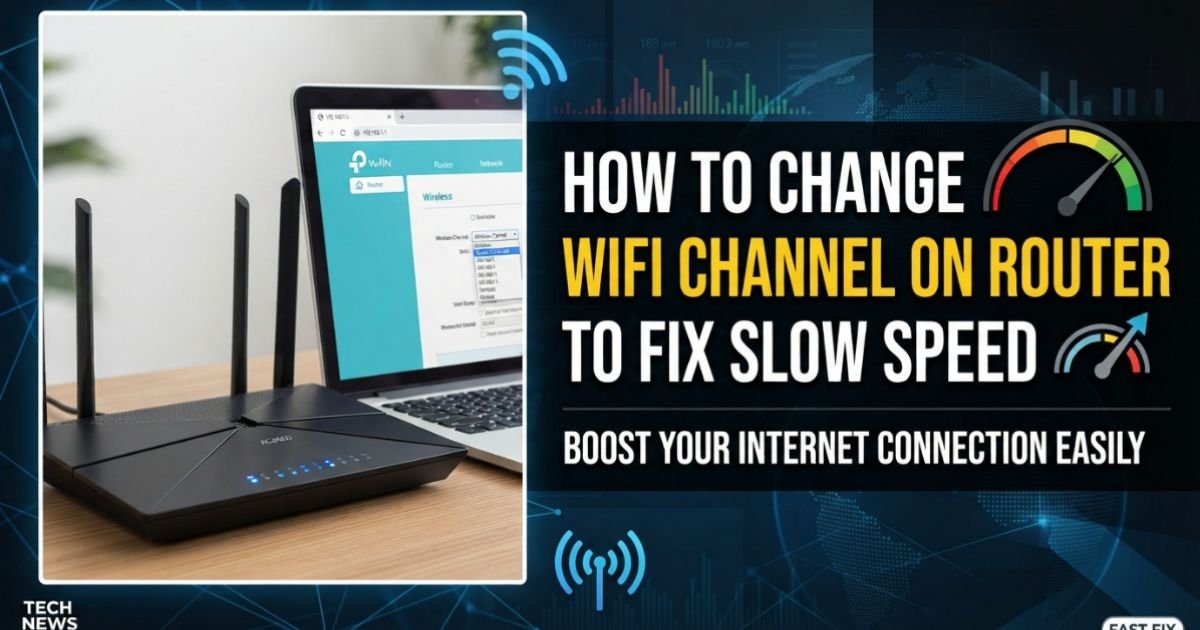
Most modern routers use a single SSID (network name) for both 2.4GHz and 5GHz bands. Sometimes, your phone hops onto 5GHz for speed, while your older Chromecast sits on 2.4GHz for range. On many routers, these two “talk” like they are in different houses.
I tested this recently: I couldn’t get my OnePlus phone to see my Sony TV. The fix? I went into my router settings and temporarily disabled “Smart Connect,” giving the 2.4GHz and 5GHz bands different names. Once both were on the exact same band, the icon appeared instantly.
The “AP Isolation” Pitfall
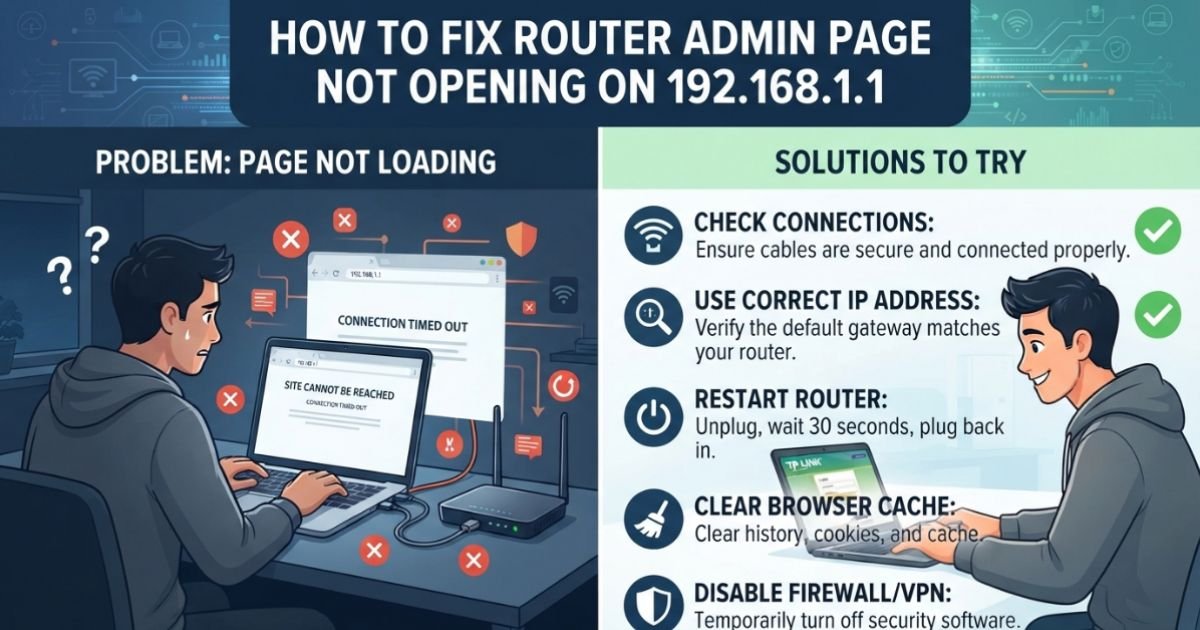
If you are in a hotel, a dorm, or using a “Guest Network” at home, you will hit a wall called AP Isolation (Access Point Isolation). This setting prevents wireless devices from talking to each other for security. If this is on, your phone literally cannot “see” the TV. If you’re at home, log into your router’s admin panel and ensure “AP Isolation” or “Client Isolation” is turned OFF.
Restart the Network Stack
On your Android phone, you don’t always have to reset all network settings (which deletes your saved Wi-Fi passwords). Instead, go to Settings > Apps > See all apps > Show system > Wi-Fi Direct and clear its cache. This often jumpstarts the discovery process for screen mirroring.
Software Fixes: Google Home and System Settings
Sometimes the hardware is fine, but the software is having a mid-life crisis. This is common after an Android cast issue after software update, especially if you just jumped to Android 15.
Clearing Google Play Services Cache
Google Play Services handles the “handshake” for casting. If its cache is corrupted, the connection will fail.
- Go to Settings > Apps > Google Play Services.
- Tap Storage & Cache.
- Tap Clear Cache (don’t clear data yet, or you’ll have to set up your Google Pay again).
The Google Home App Refresh
The Google Home App is the brain of your Chromecast. If your Android Chromecast connection failed, try this: Open the Home app, tap on your profile icon, and go to Home app settings > Clear saved Wi-Fi networks. Then, force-stop the app and re-open it. This forces a fresh scan of the network.
Hidden “Wireless Display” Services
On devices like Xiaomi, Motorola, or Pixel, there’s a system service called “Wireless Display.”
- Go to Settings.
- Search for “Cast” or “Wireless Display.”
- Ensure “Enable wireless display” is checked in the three-dot menu. Sometimes a security patch unticks this by default.
Hands-on Troubleshooting for Specific Scenarios
Casting isn’t one-size-fits-all. A Samsung Galaxy behaves very differently than a Pixel.
Samsung Galaxy and “Smart View”
Samsung doesn’t like to call it “Cast.” They call it Smart View. If you’re having an Android cast issue on Samsung Galaxy, it’s often because Samsung is looking for a Samsung TV. If you’re casting to a Chromecast, don’t use the Smart View toggle in the quick settings. Instead, cast directly from inside the app (like YouTube or Spotify) or use the Google Home app.
Pro Tip: If your Smart View is lagging, go into the Smart View settings (tap the gear icon when you open it) and change the Aspect Ratio to “Full screen on connected device.” This stops the phone from trying to render two different resolutions at once, which fixes most Android screen cast lagging issues.
VPNs and Ad-blockers: The Silent Killers
I once spent two hours trying to fix a “Source Not Supported” error on Netflix only to realize my VPN was active. Most VPNs (NordVPN, ExpressVPN) and system-wide ad-blockers (like AdGuard) create a “tunnel” that bypasses your local network.
- Result: Your phone thinks it’s in London, but your Chromecast is in New York.
- Fix: Turn off the VPN or use “Split Tunneling” to exclude the Google Home app and your streaming apps from the VPN.
DRM Protected Apps
Trying to cast a movie from a “free” movie site or a specific cable app? If you get a black screen with audio only, that’s DRM (Digital Rights Management). Apps like Netflix, Disney Plus, and Prime Video block screen mirroring to prevent piracy. For these, you must use the official “Cast” icon within the app rather than “Mirroring” your entire phone screen.
Common Pitfalls and Pro-Tips
The Power Source Problem (The most ignored fix!)
Are you powering your Chromecast via the USB port on the back of your TV? Stop. Most TV USB ports only output 0.5A, but a Chromecast (especially the 4K version) needs at least 1.0A to 1.5A. If it’s underpowered, the Wi-Fi chip will randomly drop out, leading to those annoying Android cast disconnecting randomly issues. Use the wall brick that came in the box.
Battery and Data Saver Mode
If your phone is on Battery Saver, Android will kill “background data.” Since casting is technically a background process, your phone will stop talking to the TV as soon as the screen turns off.
- Disable Battery Saver.
- Go to Settings > Apps > Google Home > Battery and set it to “Unrestricted.”
Microphone Permissions?
This sounds weird, right? But for Android screen mirroring to work, Google Play Services needs Microphone Permission. Why? Because it needs to “listen” for ultrasonic tokens used for pairing in some environments. If you’ve denied microphone access for privacy reasons, your screen mirroring might simply fail to start.
Expert Insight: If you’re experiencing Android cast no sound problems, check if your phone is connected to Bluetooth earbuds. Android sometimes gets confused and tries to send the video to the TV but keeps the audio in your ears. Disconnect all Bluetooth audio devices before you hit the Cast button.
Advanced Recovery and Last Resorts
If you’ve tried everything—clearing caches, checking the router, unplugging the TV—and you’re still stuck, it’s time for the big guns.
The Chromecast Factory Reset
There is a tiny physical button on your Chromecast. Hold it down while the device is plugged into the TV. The LED will blink orange/yellow and eventually turn white. This wipes the firmware clean. You’ll have to set it up as a “New Device” in the Google Home app. This fixes 99% of Android cast no response issues caused by corrupted firmware.
Dealing with “Source Not Supported”
If you see this error, it usually means the app version on your phone is newer than the firmware on your TV/Chromecast.
- Check for system updates on your TV.
- Check the Google Play Store for an update to the “Android TV OS Receiver” app.
Third-Party Apps (The “Workaround”)
If the native “Cast” button is just broken for you, try an app like Web Video Caster or BubbleUPnP. These apps use different protocols (DLNA) to find your TV. I’ve found that when the official YouTube app refuses to see my TV, Web Video Caster finds it instantly. It’s a great way to determine if the problem is your phone’s system UI or the actual network.
Final Thoughts: When to Call it Quits
Sometimes, hardware just dies. If you’ve done a factory reset and your Chromecast won’t even show the setup screen on the TV, or if your phone can’t find any Wi-Fi networks, you might be looking at a dead Wi-Fi chip or a fried HDMI port.
But in my experience? It’s usually just the router being stubborn about 2.4GHz vs 5GHz. Take a breath, restart your router one more time, and make sure your VPN is definitely off.
Casting is a bit like magic—when it works, it’s seamless; when it doesn’t, it’s a puzzle. Hopefully, this guide helped you solve yours. If you’re still seeing a black screen or lagging, drop a comment below with your phone model and TV brand—I’ve probably seen the specific fix for it!